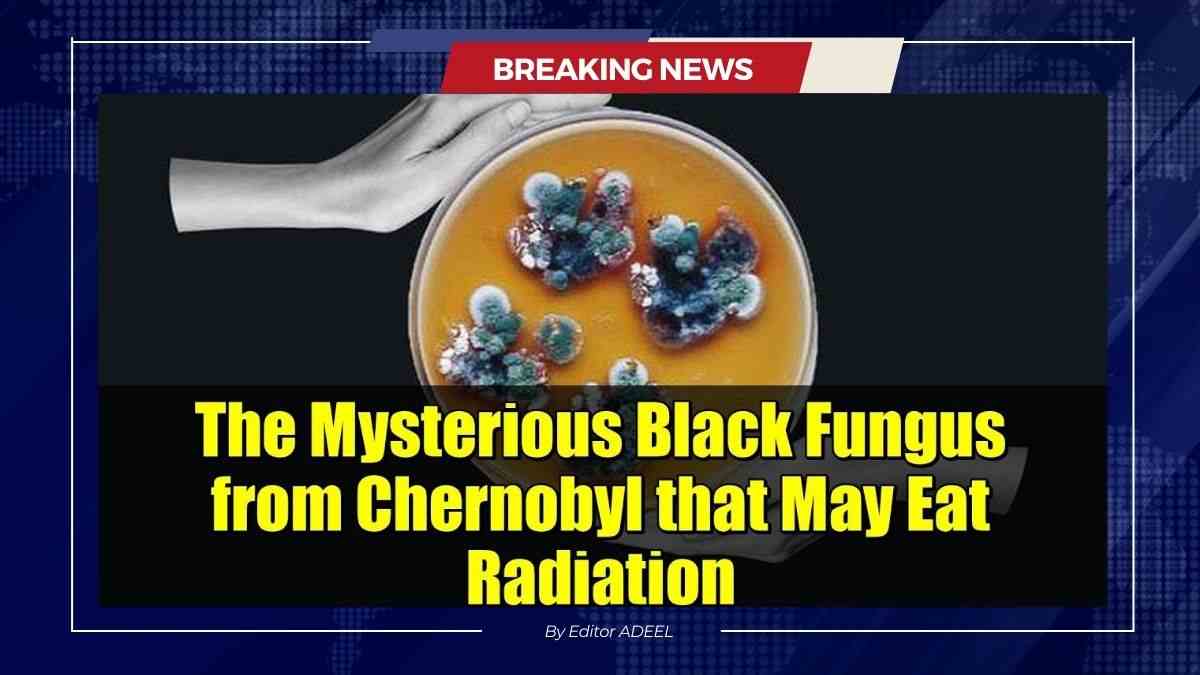
Deep inside the ruins of the Chernobyl nuclear reactor, something extraordinary is happening. A black fungus named Cladosporium sphaerospermum is thriving, not just surviving, on deadly radiation. This may sound like science fiction, but it is very real and fascinating.
This fungus doesn’t just tolerate radiation. It appears to feast on it as plants feed on sunlight. Scientists call this process radiosynthesis. The fungus uses melanin, the same pigment that gives it its dark color, to absorb and convert harmful ionizing radiation into energy. This ability allows it to grow in one of the most radioactive environments on Earth. The walls and debris of reactor 4 at Chernobyl.
The discovery of this radiation-eating fungus is not brand new. Researchers first spotted it in the late 1980s after the Chernobyl disaster. Since then, they have found dozens of fungal species thriving in the area’s radioactive zones. What’s shocking is the fungus’s ability to not just live but actively grow toward radiation sources, a phenomenon called radio tropism.
Scientists are excited because this fungus may hold the key to some futuristic solutions. For example, it could help clean up radioactive waste by breaking down dangerous particles. Moreover, experiments on the International Space Station tested whether the fungus can protect astronauts from space radiation. Results showed that even a thin shield of this melanized fungus reduced radiation by a small but significant amount.
Imagine astronauts growing a living layer of fungus on their spacecraft walls as a natural radiation shield. This could revolutionize space travel by protecting crews from the harsh radiation of deep space, where human skin and electronics face serious threats.
The discovery also hints at how life is incredibly adaptable. In a place where radiation destroys DNA and proteins, these fungi evolved to survive and even use this lethal environment to their advantage. This dark, seemingly alien fungus shows how life can find a way in even the harshest conditions.
Beyond scientific curiosity, the black fungus of Chernobyl has captured the imagination of many. It’s like a real-life superhero of the natural world, turning poison into energy. This creature continues to inspire researchers and space scientists alike, giving hope for new technology and survive tools on Earth and beyond.
From disaster to discovery, Chernobyl remains a place where science surprises us. The fungus growing in the shadow of one of history’s worst nuclear accidents could be the unlikely hero of radiation protection for the future. Who knew? Nature’s tiniest warriors might just save us all.
Subscribe to Updates
Get the latest creative news from FooBar about art, design and business.
Chernobyl’s Black Fungus: Radiation-Eating Superhero Set for Space Adventure