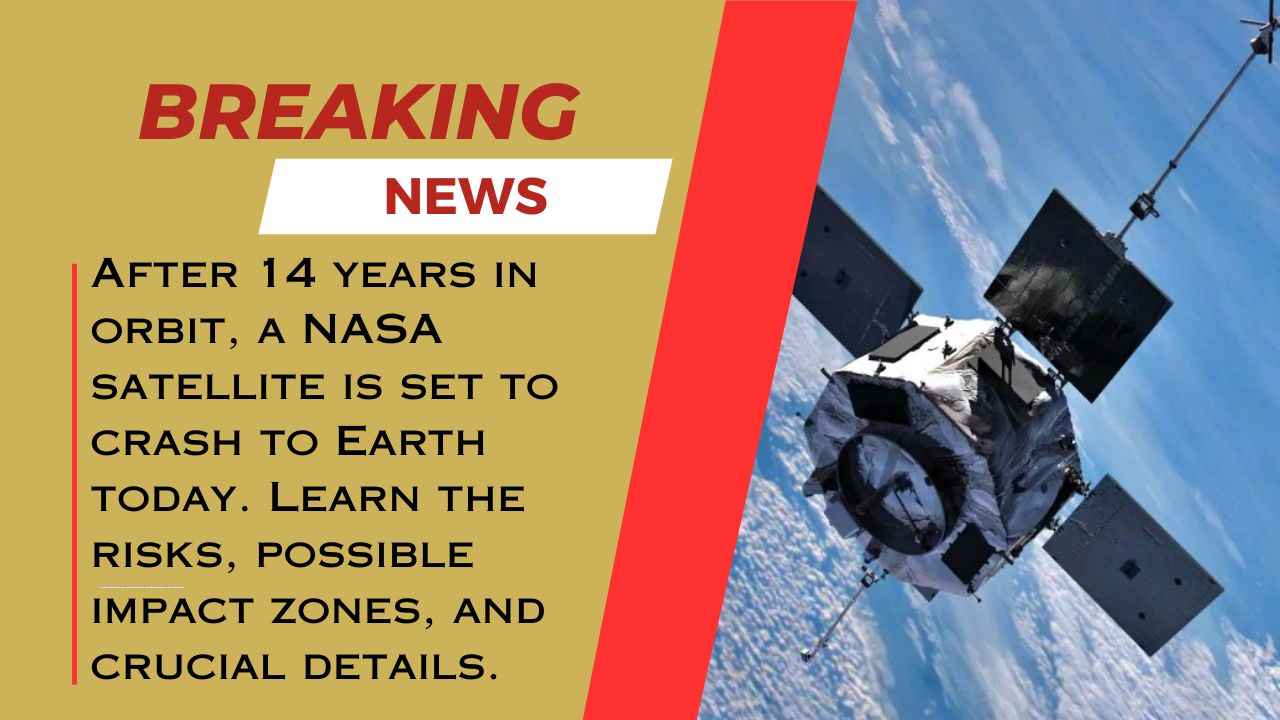
One of the NASA satellites, Van Allen Probe A, is bound to enter the atmosphere of Earth again, although experts have assured that the chances of human safety are negligible. Particles of a massive satellite of NASA are likely to fall back to the earth, but the probability that someone would be injured is deemed extremely low, according to experts.
One of two probes that were placed in orbit in 2012 to investigate the Van Allen radiation belts (regions of charged particles bound to the magnetic field of Earth) is the satellite, which weighs approximately 600 kg or 1323 pounds. The satellite, which is Allen Probe A, is estimated by the US Space Force to re-enter the atmosphere at 7:45 p.m. on March 10, 2026.
Most of the spacecraft will vaporise as it falls back to the earth as a result of the heat and friction caused during the process. Nevertheless, authorities observed that some of the tough fragments would make it through the burning fall and land on the earth. According to NASA, the Space Force calculated the possibility of a person getting injured is roughly 1 in 4200.
NASA and the Space Force indicated that they were still monitoring the descent of the Probe and that they would change its re-entry schedule, which now has a margin of error of around 24 hours.
The Probe, now coming back to Earth, was launched together with its twin, known as Van Allen Probe B, from Cape Canaveral on August 30, 2012, to investigate the space radiation around the Earth. The two spacecraft ceased their operations in 2019 due to fuel depletion.
Designed originally for a two-year mission, the Probes served almost 7 years of service, gathering more data about the radiation belt on Earth and ever before, and the mission was terminated in 2019 when the spacecraft ran out of fuel and could no longer point towards the Sun.
The expectation was that they would orbit until the year 2034; however, the orbit was altered over time. This occurred because of the height and solar activity. In 2024, it was estimated that the sun had arrived at its solar maximum or high point of the 11-year cycle of activities, leading to a stronger space weather and resulting in a high atmospheric drag on the spacecraft and hence the fact that it fell faster than its expected position. Nevertheless, the second probe continues to orbit the Earth and will not come back until later in this decade.
Subscribe to Updates
Get the latest creative news from FooBar about art, design and business.
NASA Satellite to crash on the Earth today after 14 years in orbit: Everything you need to know